
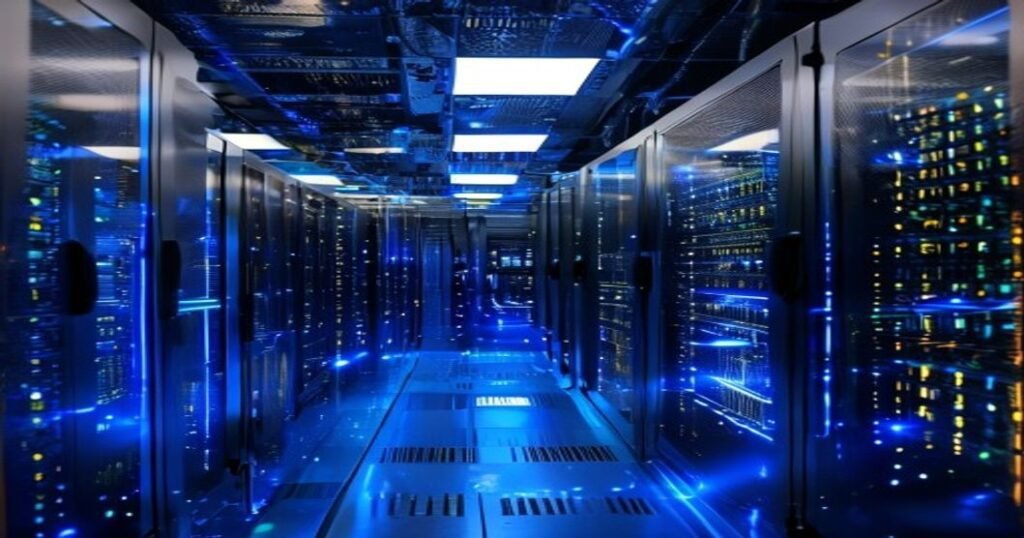
Pakistan’s AI dream sits on a fragile foundation of weak power, limited compute, and outdated infrastructure, yet this is exactly where its digital future will be decided. This blog unpacks the hard numbers, the geopolitical stakes, and the urgent policy shifts needed if Pakistan is to become a digital power, not a digital colony.riazhaq+4
Introduction: Hype, Hall Rooms, And Harsh Reality
In Pakistan’s technology circles, government briefings, and five-star hotel conferences, one mantra dominates: “AI revolution.” Slides celebrate rising freelancing income, global rankings, and a supposedly booming digital economy. Step outside those polished halls, however, into load-shedding, voltage fluctuations, and creaking infrastructure, and a very different picture emerges—one that signals not just concern, but systemic risk.
This blog is not about spreading despair; it is an attempt to shake policymakers, investors, and professionals out of complacency by asking a simple but brutal question: in the global AI race, where do we actually stand? And more importantly, what will it take to catch up before the gap becomes irreversible?
The AI Mirage: Users, Not Creators
Global surveys now place Pakistan among the world’s top users of generative AI tools such as ChatGPT, image generators, and other AI-powered apps. At first glance, this looks like a success story: young people experimenting, businesses adopting automation, and professionals enhancing productivity. But there is another side to this story that, if ignored, will define Pakistan’s digital destiny in all the wrong ways.
In the modern economy, there is a structural divide between those who create technology and those who merely consume it. Creators set the rules, capture the value, and own the platforms; users simply operate within those rules and pay for access. Every time Pakistani users upload photos, business data, chats, and documents to foreign AI platforms, they are effectively exporting “digital raw material” for free, enabling companies in the United States, Europe, and China to train smarter models that are then sold back to us as paid services.government.economictimes.indiatimes+1
This is twenty‑first‑century digital colonization: the same pattern as the old extractive empires, but with data instead of cotton and code instead of steel. Without sovereign compute infrastructure and domestic platforms, Pakistan is a tenant in someone else’s digital empire, not the owner of its own. Riazhaq+1
The New Battlefield: Chips, Compute, And Cloud
Modern artificial intelligence does not live in the air; it lives on silicon. Training and running large models require massive numbers of high‑end GPUs, especially enterprise‑grade accelerators like NVIDIA’s H100 and H200. Globally, these chips are treated like strategic assets—more sensitive than oil and sometimes more expensive than gold.
Recently, Pakistan saw a milestone: a locally hosted AI‑ready cloud and dedicated AI data center equipped with more than 3,000 high‑performance GPUs, including H100/H200‑class hardware. This is a major step forward, providing GPU‑as‑a‑service to startups, researchers, banks, and public sector projects across finance, agriculture, healthcare, safety, logistics, and more. It marks Pakistan’s entry into the small club of countries with serious on‑shore AI compute capacity. PakistanToday+2
Yet scale tells another story. Under the IndiaAI Mission, India has sanctioned the procurement of 34,333 GPUs, with over 17,300 already installed across a nationwide AI cloud platform. This infrastructure is specifically designed to support indigenous large language models, foundation models, and high‑impact AI applications, backed by substantial public subsidies. When you compare roughly 3,000 GPUs in Pakistan to more than 34,000 in India, you see not just a difference in numbers, but a difference in ambition, prioritization, and strategic clarity.outlookbusiness+2
With 3,000 GPUs, you can fine‑tune existing models, power selective workloads, and serve a growing ecosystem of local applications. With 34,000, you can build your own foundation models at scale, embed your own languages and culture in global‑class systems, and become a genuine exporter of AI capability. That is the gap Pakistan must confront, honestly and urgently.outlookbusiness+2
Data Centers: The Missing Tier 4 Backbone
GPUs are the brain of AI, but they need bodies—data centers—to live in. Data centers are the factories of the digital age: they host models, store data, and keep critical systems alive around the clock. In Pakistan, multiple commercial and government‑linked facilities support cloud and AI workloads, and the market is growing at a double‑digit compound annual rate. However, the strategic question is not only how many data centers exist, but what tier of reliability they offer.[mordorintelligence]
The Uptime Institute defines four tiers of data center design, from Tier I (basic) to Tier IV (fault‑tolerant). Tier III can support concurrent maintenance without shutdown, which is close to what Pakistan’s best facilities strive for in practice. Tier IV, however, provides fault‑tolerant architecture with fully redundant power, cooling, and network paths, allowing operations to continue even during severe failures, grid outages, or major incidents.[mordorintelligence]
Globally, Tier IV is fast becoming the effective standard for mission‑critical, always‑on AI workloads—especially in domains like autonomous systems, healthcare, financial infrastructure, and national security. In those use cases, even a few seconds of downtime can mean financial loss, safety risks, or reputational damage at scale. While India already features multiple certified Tier IV sites, Pakistan’s current landscape remains centered on lower‑tier or Tier III‑class facilities, with newly launched AI data centers often engineered for high availability but not yet widely recognized as Tier IV under the most stringent international certifications.dawn+1
The consequence is stark: without a fully fault‑tolerant infrastructure, global enterprises will hesitate to host their most sensitive or mission‑critical AI workloads on Pakistani soil. At best, the country risks being relegated to low‑value storage or non‑critical backup roles rather than becoming a primary hub for next‑generation autonomous and agentic AI systems.[mordorintelligence]
Energy: AI’s Hunger Versus Pakistan’s Grid
Artificial intelligence is an energy‑intensive technology. Training and serving large models can consume as much electricity as hundreds or thousands of homes annually, which is why data center power consumption has become a policy issue across the United States, Europe, and Asia. In the United States, AI‑heavy data centers already use electricity comparable to entire mid‑sized countries, and demand continues to rise.[mordorintelligence]
Pakistan’s situation is paradoxical. On paper, installed generation capacity exceeds peak demand, and new projects have added gigawatts of potential supply. In practice, however, a mix of ageing transmission lines, distribution losses, technical faults, and governance challenges translates into frequent outages, voltage instability, and localized shortfalls. For advanced GPUs and high‑density racks, this kind of erratic power quality is more than an inconvenience—it is a direct threat to hardware life, performance, and service‑level guarantees.renewablesfirst+1
Faced with these constraints, many large consumers, including future‑facing data centers, are turning to self‑generation and off‑grid or partially off‑grid solutions. Pakistan has become one of the world’s largest importers of solar panels, adding around 17 GW of solar modules in 2024 alone and nearly 18 GW in fiscal year 2025, largely driven by citizen‑led, private‑sector solar adoption rather than a centralized national program. This solar rush is both an opportunity and a warning: it reflects enormous potential in renewable energy, but it also signals a deep erosion of trust in the reliability and affordability of the national grid.theelectricityhub+1
For AI data centers, solar‑plus‑storage and long‑term power purchase contracts could provide cleaner, more predictable energy at competitive cost, especially if wheeling policies allow direct purchase from independent solar farms. For the broader economy, however, uncontrolled grid‑bypass trends risk fragmenting the energy system, undermining the financial viability of utilities, and complicating long‑term planning.theelectricityhub+1
Tax Policy, GPUs, And The Innovation Squeeze
Even when entrepreneurs and institutions are ready to invest in AI infrastructure, policy can either accelerate or suffocate that momentum. High‑end GPUs and related components are often classified under generic or consumer‑oriented tariff lines, such as gaming or luxury electronics, attracting import duties and taxes that can exceed one‑third of the hardware cost. For a university lab, a public‑sector researcher, or a small AI startup, this level of fiscal friction can be the difference between experimentation and stagnation.[dawn]
Meanwhile, other countries are moving in the opposite direction, treating computers as strategic industrial machinery rather than discretionary electronics. The IndiaAI Mission, for example, combines capital subsidies on GPU infrastructure with subsidized access to compute for teams developing foundation models and high‑impact applications, explicitly framing AI as a national capability rather than a niche IT vertical. In that context, treating GPUs as taxable “toys” is not just a classification error; it is a strategic mistake.government.economictimes.indiatimes+2
Unless Pakistan reclassifies high‑performance compute hardware as productive capital goods and aligns customs, taxation, and regulatory frameworks with that reality, AI research and innovation will remain concentrated in a few well‑funded entities instead of becoming a nationwide capability. profit.pakistantoday+1
From Chatbots To Agentic AI: Why Infrastructure Matters
The global AI conversation has already moved beyond simple chatbots and text generators. The next wave is agentic AI—systems that can understand goals, plan actions, interact with the real world, and execute tasks autonomously across digital and physical environments. Examples include autonomous farm drones, robotic surgery assistance, self‑optimizing power grids, industrial automation, and personalized teaching agents that adapt to each student.outlookbusiness+1
For a country like Pakistan, where shortages of doctors, teachers, and technical staff are systemic and rural gaps in service delivery remain wide, agentic AI is not a luxury; it is a potential lifeline. Yet agentic systems are deeply dependent on exactly the ingredients Pakistan currently lacks at scale: fault‑tolerant data centers, reliable and affordable power, abundant compute, robust connectivity, and strong data governance.government.economictimes.indiatimes+1
Without that backbone, Pakistan will be confined to using agentic AI hosted abroad, paying recurring fees in foreign currency, and exporting sensitive behavioral and institutional data in the process. With it, the country could build sovereign systems tailored to its own languages, norms, and constraints, unlocking productivity gains across agriculture, health, education, logistics, and public administration. profit.pakistantoday+2
Policy Roadmap: From Digital Colony To Digital Power
If Pakistan wants to be a serious AI player by 2030, it needs urgent, coordinated, and technically informed policy decisions. The good news is that the building blocks exist: a large and young talent pool, a rapidly growing solar base, early GPU‑enabled clouds, and a vibrant private sector willing to invest. What is missing is an aligned national framework that treats AI infrastructure as a strategic priority rather than an afterthought.riazhaq+3
Here are four concrete pillars for such a roadmap:
1. Make GPUs Strategic Industrial Machinery
High‑performance GPUs and AI accelerators should be reclassified as strategic capital equipment, not consumer electronics. That means:[dawn]
- Zero or minimal import duties on AI‑grade GPUs, networking gear, and supporting hardware for certified industrial, academic, and R&D use.[dawn]
- Fast‑track customs clearance for AI infrastructure under a dedicated regulatory regime aligned with digital industrialization goals.[government.economictimes.indiatimes]
- Special allowances for universities and public research labs to acquire computing capacity tax‑free, subject to transparent usage and reporting.[dawn]
By lowering the effective cost of computing, Pakistan can widen participation in AI research beyond a handful of elite institutions and corporations.[profit.pakistantoday.com]
2. Build A National Tier 4 Class AI Cloud
Pakistan needs at least one nationally backed, Tier 4–class AI cloud platform that can host mission‑critical workloads, keep sensitive data onshore, and serve as a trusted backbone for both public and private innovation. This should:mordorintelligence+1
- Be developed as a public–private partnership, leveraging existing GPU‑rich facilities and telecom‑grade data centers. Riazhaq+1
- Meet international certifications for uptime, redundancy, security, and data protection to attract regional AI hosting demand.[mordorintelligence]
- Offer transparent, fair‑priced access tiers for startups, SMEs, universities, and government agencies, including subsidized access for strategic use cases. profit.pakistantoday+1
Such a platform would anchor Pakistan’s AI sovereignty and reduce dependence on foreign hyperscalers for critical digital infrastructure.[riazhaq]
3. Enable Wheeling And Green Power For Data Centers
To resolve the energy bottleneck, Pakistan should expand and simplify wheeling frameworks that allow data centers to buy electricity directly from independent solar and wind producers at competitive rates. Key moves include:renewablesfirst+1
- Standardized wheeling contracts, transparent charges, and predictable regulatory treatment for long‑term power purchase agreements.[uploads.renewablesfirst]
- Incentives for data centers that commit to a high share of renewable energy, including expedited approvals and fiscal benefits.[theelectricityhub]
- Technical upgrades in grid‑connected zones with high data center concentration to stabilize voltage and reduce technical losses.[uploads.renewablesfirst]
If designed well, this approach can simultaneously strengthen grid planning, encourage investment in utility‑scale renewables, and support AI growth without overloading legacy infrastructure.theelectricityhub+1
4. Enact A Data Sovereignty And Localization Framework
A modern AI economy runs on data. Pakistan needs a clear, enforceable framework that protects citizens’ and institutions’ data while also creating demand for domestic hosting and processing. That implies:[dawn]
- A Data Sovereignty Act requiring banks, critical national infrastructure, and core public services to store and process primary data within Pakistan on certified infrastructure.mordorintelligence+1
- Clear rules for cross‑border data flows, anonymization, and model‑training on domestic datasets, balancing innovation with privacy and security.[mordorintelligence]
- Strong cybersecurity and compliance standards for local data centers to build international trust and enable cross‑border services exports.[dawn]
Such a framework would give investors confidence, create predictable demand for high‑quality local data centers, and reduce systemic exposure to external shocks.[mordorintelligence]
Conclusion: The Narrow Window Ahead
Pakistan stands at a narrow crossroads. Local AI data centers with thousands of high‑end GPUs are finally live; solar adoption is booming; and a generation of young professionals is already comfortable using frontier tools. At the same time, structural weaknesses in energy, infrastructure, tax policy, and data governance threaten to lock the country into a permanent role as a digital client state rather than a digital power.theelectricityhub+5
The choice is not abstract. Countries investing today in energy, compute, and data infrastructure will write the rules of the AI era; those that hesitate will merely log in, click “accept,” and live by those rules. For Pakistan, the question is simple and unforgiving: will it build the foundations to own its AI future, or remain content as a highly active but ultimately dependent user of other nations’ intelligence?outlookbusiness+3